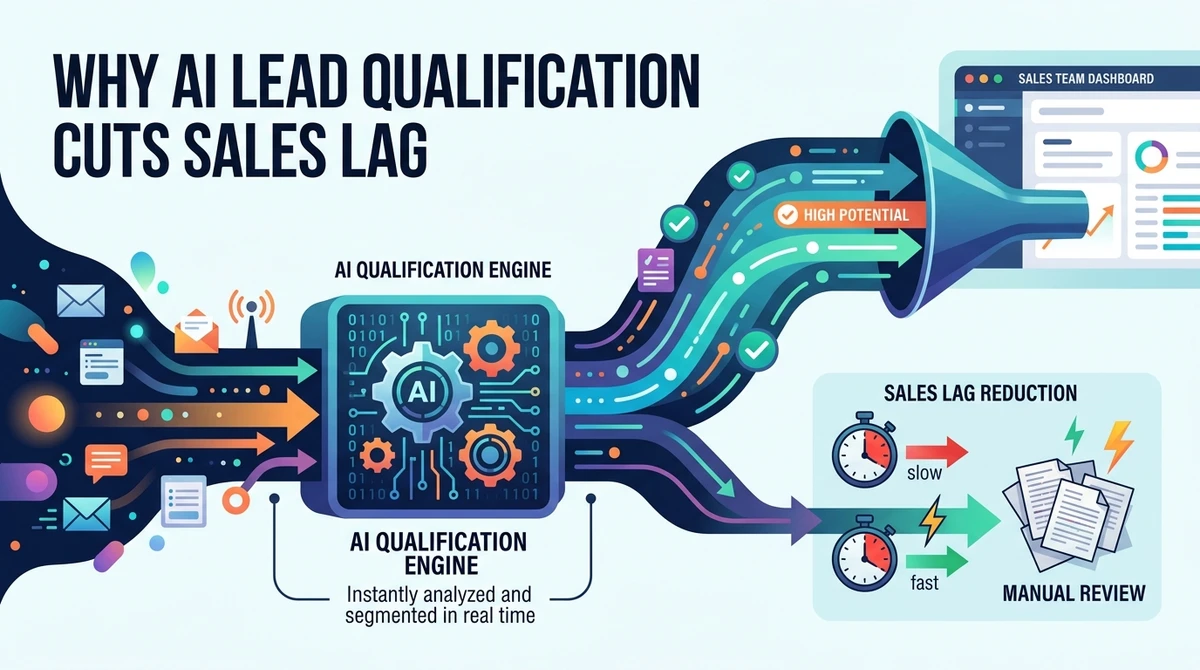
I used to think what is ai lead qualification was just a nicer way to say chatbot. It isn’t. AI lead qualification is a system that asks the right questions, reads visitor behavior in real time, and routes only sales-ready leads into your workflow, which is exactly why teams use it to cut response lag from hours to seconds.
For agencies and sales teams, that matters because the first 5 minutes still carry outsized weight, and once a visitor leaves, the chance to recover that lead drops fast. We build for that gap every day.
What AI lead qualification actually does
AI lead qualification refers to an automated conversation that identifies intent, fits, and urgency while the visitor is still on the site. In practice, it behaves less like a static form and more like a live intake rep that adapts its questions based on what someone clicks, how long they stay, and which pages they view.
Here’s the part most articles miss: the goal is not to ask more questions, it’s to ask fewer, better ones. A visitor reading pricing may get a short qualification flow about team size and timeline, while someone on a case study page may get a different path centered on industry and use case. That’s how to qualify leads without making people feel like they’re filling out a questionnaire.
AI qualification works best when it narrows the next action. If the visitor is ready, it books, captures, or routes. If they’re early-stage, it tags and nurtures. That single decision point is what separates useful automation from decorative chat.
The formula we use is simple: Lead Quality = Intent Signal x Fit Signal x Response Speed. When one of those drops to zero, the conversion usually follows.
How does real-time qualification work?
Real-time qualification works by combining page context, conversation logic, and workflow routing in one continuous loop. The agent sees where the visitor came from, what they do next, and what they say in the chat, then adjusts the path without waiting for a human to step in.
- Detect the visitor’s source, page path, and session behavior.
- Start a short conversation that matches the page intent.
- Collect the minimum data needed to score fit and urgency.
- Send qualified leads into the CRM, calendar, or Slack workflow.
A useful example: a visitor lands on a paid search landing page at 9:12 p.m., asks about pricing, and mentions a 12-person team. A manual form would wait until someone fills it out, then a rep follows up the next morning. An AI agent can qualify that lead immediately, capture the email, and push the record to HubSpot or Salesforce before the visitor closes the tab.
That is the real advantage of website lead capture automation benefits, faster action while attention is still high.
Why most manual lead qualification breaks
Manual qualification usually fails because the work arrives at the worst possible time, after the visitor has already decided whether to stay. We’ve seen this pattern repeatedly: a form gets 18 fields, the rep gets distracted, and the lead cools before anyone responds.
The issue isn’t effort, it’s timing. Human teams are strong at nuance, but weak at 24/7 consistency. If your site gets traffic at night, on weekends, or across multiple time zones, manual handling creates a visible leak.
According to FAQ